Minimalist
2048 is a free, open-source puzzle game created in 2014 by a 19-year-old Italian web developer named Gabriele Cirulli, who built it over a single weekend and published it on GitHub under the MIT License. It went on to consume roughly four million human lives in its first week. Not because it's complicated — it's the opposite of complicated — but because your brain will not let you stop. Here's the deal. You've got a 4×4 grid. Two tiles are sitting on it, each showing the number 2. You swipe in a direction — up, down, left, right — and every tile on the board slides that way until it hits a wall or another tile. If two tiles with the same number collide, they merge into one tile worth their sum. Two 2s become a 4. Two 4s become an 8. Two 8s become a 16. After every swipe, a new tile (usually a 2, occasionally a 4) pops up in a random empty space. Your goal is to keep combining tiles until you forge the mythical 2048 tile. The problem is that every move spawns a new tile, the grid is only 16 squares, and the moment you can't move — because every space is full and no neighbors match — you're dead. It's basically a territory war between you and entropy, and entropy is very patient. The strategy is deceptively deep for something with four inputs. Experienced players will tell you to pick a corner, keep your biggest tile parked there, and build a descending cascade along one edge — sort of like organizing a shelf where the heaviest books go on one end. The moment you let a big tile drift into the middle, your board starts to choke. You'll develop opinions about this. You'll start swiping left in your sleep. This is normal. It's free, it's open-source, it runs in any browser, and a round takes about ten minutes — or four hours, depending on how many times you whisper "one more try" to yourself. You should play it right now. You should also clear your afternoon.
Puzzle · Relaxing · Minimalist
A classic crossword game, designed for casual puzzlers and competitive speed-solvers alike. Enjoy Puzzle One today. Puzzle Two drops in September.
Game Introduction After losing his guardian, Elias walked the ruins alone. On the verge of collapse, he reached a lone house standing in the waste. A small silhouette stood in its window. Inside lived three machines with hollow eyes, still repeating the duties of owners long gone. They gave Elias a bowl of warm soup. Game Description Hollow Friend is a short illustrated adventure written in observational prose. Emotions are not described. Only what Elias sees and hears remains. At the end, one choice leads to two endings. Headphones are recommended. Credits Godot Browser Play 한국어 / English Gamedev.js Jam 2026 Entry Writing & Art & Code: Otterscribe
AngleBall is a mouse-controlled game where the player rolls a ball at simple geometric shapes. The ball bounces off any shape it touches and goes off in another direction. The goal is to make the ball touch each shape enough times until the shape disappears. Red shapes require 3 hits Orange shapes require 2 hits White shapes require 1 hit
2D · Minimalist · Puzzle
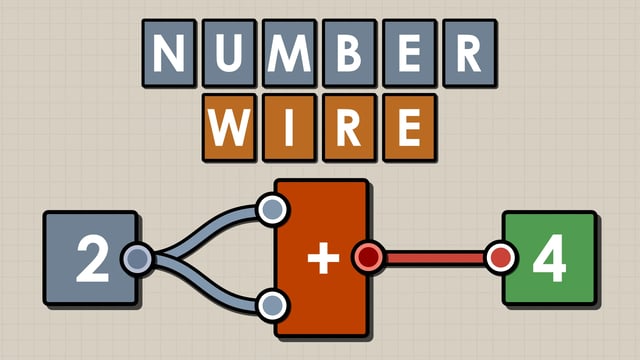
Connect, reuse, and combine numbers and operations to hit several targets at the same time. Each puzzle gives you a few starting numbers and a set of operations that add, subtract, and hold values. Wire them together to build a circuit that reaches all the target values. One output can feed as many pieces as you like, so the same number can become two different answers at once. Play with mouse or touch. Drag from the right side of a piece to the left side of another to connect them. Tap or click a wire to remove it. Drag pieces to rearrange your board. Right-click a piece (long-press on mobile) to view information about it.
Puzzle · Logic · Minimalist
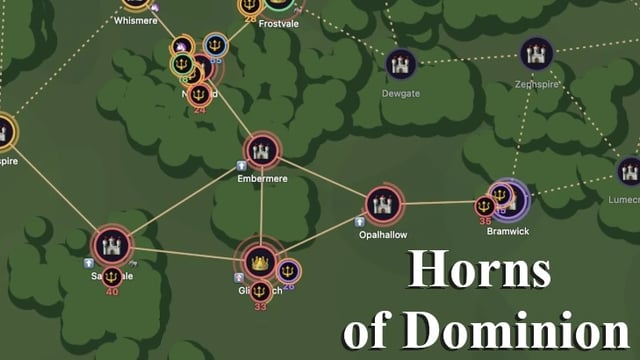
The Lands beyond the rainbow have kept no single crown since the Accord broke centuries ago. They remain divided into five constantly warring noble realms — Crimson Mane, Sunmane Reach, Verdant Glade, Azure Spire and Violet Veil — their cities strung along the old roads between them. You are the king of one of these realms, living in one of three periods of the Mazurian Age where total conquest and unification were the only solution. Twenty cities. One crown. No second place. THREE SCENARIOS TO FIGHT IN I. Rise of the Golden Horn · Year 13312 — a close-packed map where every realm is a neighbour. II. The Broken Accord · Year 13986 — a real split into two areas bridged by just two cities. III. The Radiant Spire · Year 14001 — more roads than any age before, and longer. Every campaign of a given age is fought on the same land, so two kings can compare their wars. Time runs in the Mazurian Age: thirteen months of twenty-eight days, Auriel through Lunaris. A road takes about a week to walk, a warband takes six days to muster, and your campaign is scored in the days it took you to conquer the whole of it. PLAYING It is real time, with a pause. Nothing waits for you, but you can stop the world and think. Click your city → raise a warband. It costs 💎 gold and 👥 populace, and takes time. Click your warband → it marches at your word (the cursor turns to a crosshair). Click a city → go there, however many roads away; the march finds its own path. Click an enemy host → go and meet it on the road between you. Click anywhere else → stand down. Space pauses, 1–4 set the pace, M mutes. Drag to pan, pinch to zoom. Gold comes from the cities you hold, so every wall you take pays for the next army. Warriors come from the people, and a city drafted hard has fewer of them to give. WHAT EVERY COMMANDER LEARNS 🔱 Footmen are raised anywhere. 🦄 Unicorns and 🐘 behemoths are bred, and only two cities in a realm breed them — its capital and its next greatest city. Take those and the pens come with them. On a road a host fights at the pace it marches: outrun what you land on and you caught it strung out, so unicorns break footmen, footmen break behemoths, and unicorns maul behemoths worst of all. Behind walls, speed counts for nothing — behemoths breach in a fraction of the time and unicorns are no siege engine at all. Catching a behemoth column between cities is the best thing a unicorn will ever do. Numbers are health. Every muster is the same forty bodies whatever it raises, and damage comes off bodies while a kind's strength only multiplies what it deals. Fifty behemoths lose to a hundred footmen for the same gold. A behemoth is a siege arm, not a strong generalist. Warriors tire. Marching wearies a host; fighting wearies it four times faster, and it sheds that only by standing still. Winded, it moves at half pace — which usually means it cannot get away. Breaking off a fight costs a quarter of the host on top, so the time to retreat is before you need to. A city never fights for itself. Two hosts on a city trade as they would on the road outside it, less the speed and plus home ground: men on a city of their own realm swing twenty percent harder, knowing the streets and the wells. A city spends its defence on the siege instead — and only once there is nobody left to fight, at which point it is a tax in blood on the besiegers while the wall points set the clock. A city remembers its original banner. Conquer it and it seethes, riots, and throws you out — no mob, no siege, it simply goes home — unless you leave men enough to sit on it. Roughly one warrior for every seven souls will hold the lid down, and twice that will calm it quickly. Those are men not marching on the next wall. A realm ground down to a rump rallies nobody, so its lost cities finally settle and a conquest can end. Walls mend themselves, slowly, and only while no enemy stands at the gates. There is nothing to order and nothing to pay. The fog hides intent, never ground. You always see the roads and the cities; what walks them is another matter. You see a city while you hold it, border it, or stand a host on it — elsewhere, hosts in the dark are invisible, and so are the battles fought there. FOUR RUNGS Dreamer, Duelist, Warlord and Tyrant scale what your enemies get: their economy, how many decisions they make a turn, how large an army they will keep standing, and how firmly they hold what they conquer. Yours never change. Warlord is the default, and it does not flinch. NO ASSETS Every pixel of this is generated: the land, the cities, the warbands, the music and the sound of battle. There are no image files and no audio files, because there is no room for any — the whole game is 13,312 bytes, which is also, not by accident, the year the first age opens on.
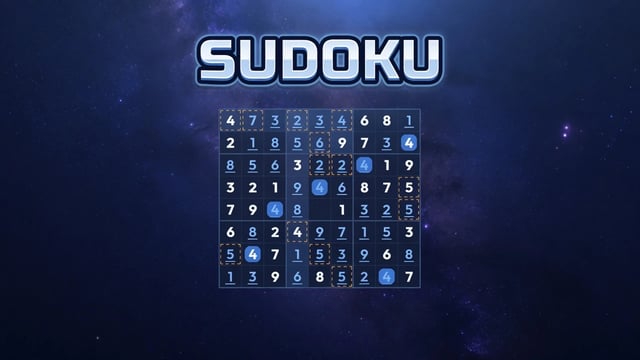
A clean, fast Sudoku - pick a difficulty (Easy, Medium, Hard, Expert), solve a guaranteed unique-solution puzzle, and track personal bests across sessions.
Puzzle · Logic · Minimalist

Rainboom is a tiny incremental arcade game about completing rainbows. Blast unfinished arcs, trigger chain reactions, collect upgrades, and build increasingly ridiculous rainbow-powered abilities as you fill the sky with color. 🌈 Made for js13kGames 2026, an annual game development competition where the entire game must fit within just 13KB. The theme was Unicorns and Rainbows.
incremental · VR · Minimalist
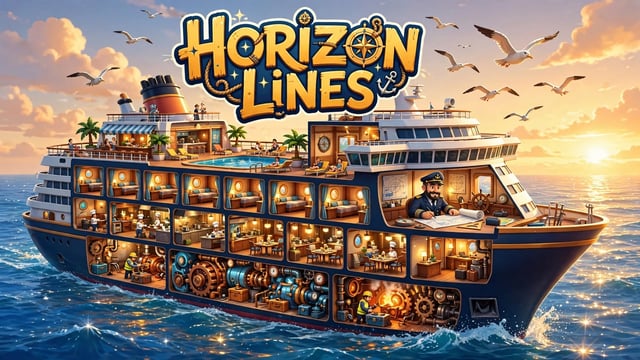
Design and manage passenger ships in this nautical simulation game. Build functional deck layouts, balance safety and engineering metrics, and send vessels on profitable voyages.
Cozy · Exploration · Adventure
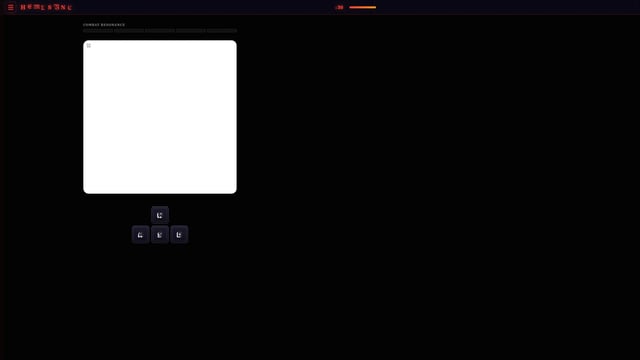
HEMISYNC is a short game that demands you divide your attention between two different minigames which must be played simultaneously. Your performance on the left hemisphere will resonate with the right hemisphere and vise versa. Created by Mike Valverde Submission for Wavedash Summer Jam 2026
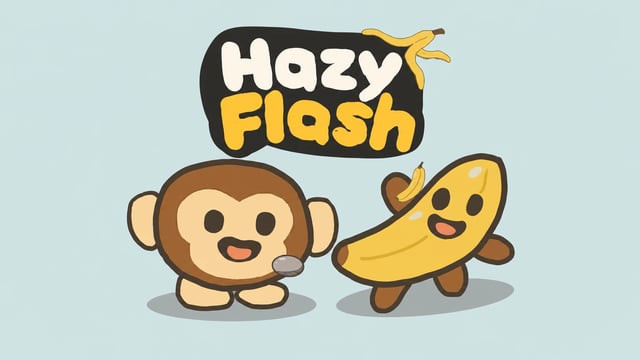
Wake Up! A monkey was running, full of joy, until they slipped on a banana peel. When they opened their eyes, they were in the prehistoric era. And they were a banana now. The monkeys are coming to eat them. Stand. Fight back. Wake up. This game is designed to be beatable as long as you don't give up. Submitted for Mini Jame Gam #54 Themes: Time Travel & Banana Credits Game Design, Art, Music — Otterscribe Sound Effects — freesound.org AI was used for coding only.