1980s
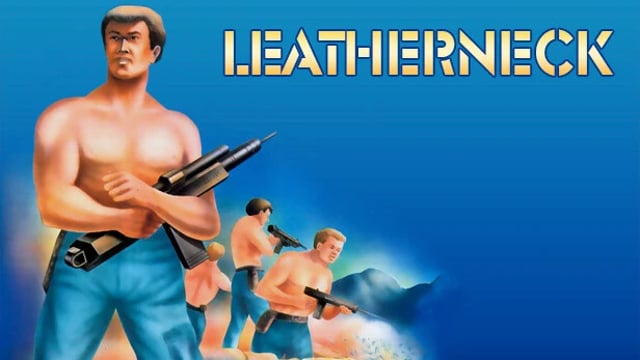
In this arcade-style top-down shooter, originally released in 1988 for the Commodore Amiga, take on the role of members of a four-man squad fighting through a treacherous jungle environment. Play with up to four players in local co-op.

8-bit hero Horace is often considered the unofficial mascot of the ZX Spectrum. His first game saw him go hungry, in his third he battled spiders… but 1982’s Horace Goes Skiing saw the instantly recognisable character don his skis and hit the slopes. Your first task is to cross a busy road that lies between you and the ski shop – not such an easy task considering the volume of traffic you’ll encounter. Dangerously large trucks, crazy speeding ambulances and short-sighted drivers all add to the fun. Having made it across alive, you can pick up your skis… and now you’re going to have to cross back over. Which idiot built the shop there in the first place? The second stage sees Horace pelting his way through a flagged course; stay within the race zone and you’ll score plenty of points, but watch out for bumps in the course that’ll send you zinging off in the wrong direction. Finish the race and you get the best news of all: you get to do it all over again. But watch out for Horace’s nemesis – you never quite know when he’s going to appear! Despite its apparent simplicity, Horace Goes Skiing cemented its place in gaming history with its mix of simplicity, arcade-action gameplay and a unique graphical style that many retro fans still hold a candle for to this day. According to the original instructions: Horace Goes Skiing is a sequel to the very successful Hungry Horace. The Horace series pioneers the idea of inter-active cartoons. Help Horace to slalom down the mountain course between the flags and avoiding the trees - but first he must cross the busy roads to get to the ski slopes. A complex, colourful and outstanding computer game. Before Horace can get to the ski-slopes he must fetch his skis from a hut on the other side of the busy road. Horace will move in one of four directions: Up, Left, Down and Right. At the beginning of the game, Horace has $40 to spend. If he is knocked down it will cost him $10 in ambulance fees. After Horace has successfully crossed the road, guide him into the door of the hut where he will fetch his skis. The charge for ski hire is $10. Horace should not enter the ski hut unless he can afford the hire charge. If Horace has spent all his money on ambulance fees, then he can accumulate points and money by crossing the road repeatedly, as at every 1000-point boundary, Horace receives a $10 bonus. Horace should not linger on the road longer than necessary, since the traffic becomes progressively more congested. After fetching his skis Horace must return across the road to the ski slopes. In the second part of the game Horace must ski down the Hannekon run, avoiding the trees and slaloming between the red and blue pairs of flags. If Horace fails to pass between the flags a warning note is sounded and Horace will lose points. Horace can parallel left or right using the chosen control method. Horace increases his points by passing between the flags and he can also receive a 100-point bonus by passing through the finish barrier. As in the highway section, there is a $10 bonus at every 1000-point boundary. If Horace should hit a tree then he can continue on the slope provided that his skis do not break. If his skis do break then Horace must again cross the road for a new set of skis and then return across the road to the ski slopes. If Horace successfully completes the course with his skis intact then he must cross the road once with his skis to the next slope.

In 1982, a new breed of hero was born. Horace – who would go on to star in three popular games – was unleashed into the world by his creator, renowned 8-bit coding maestro William Tang. Although it was never officially declared so, the loveable blue… thing that is Horace was considered by many to be a mascot of the highly popular ZX Spectrum. Just seeing his instantly-recognisable sprite often sends gamers of a certain age into rapture, insisting that everything was better ‘back in the day’ when graphics and sound didn’t matter as much as gameplay. Horace’s first adventure – Hungry Horace – took inspiration from popular arcade titles of the day, with the titular character navigating his way through a maze, picking flowers and avoiding the angry parkies, whose clumsily-dropped lunch would then be rife for the taking. According to the original instructions: You are Hungry Horace, intent on devouring everything in your path. Each flower in the park that Horace eats scores 10 points. But beware of the park guards who are out to catch Horace and eject him from the park. If Horace is caught three times he will not be allowed back in and the game will end. There are several alarm bells in the park. If Horace can ring one of the alarms, the guards will panic and Horace can turn the tables, catching them and throwing them out of the park. Look out for when one of the guards drops his lunch of cherries or strawberries. You will score 100 points if Horace eats the guard’s lunch. The park is divided into several sections and in each part there is an exit leading to the next section. Horace does not need to eat all the flowers or reach the alarm before entering the next section. Each section of the park is harder than the one before.
In the third Horace game, released in 1983 for the ZX Spectrum, help Horace climb a mountain while jumping over the spiders that scuttle towards him, then swing across the spider bridge on dangling threads. Finally, enter the spiders' lair, tear holes in their web and stamp on the spiders when they come to mend it. Originally released in 1983 by Sinclair Research, written by William Tang of Beam Software. This Wavedash version is the ZX Spectrum release from Pixel Games UK.
1980s · 2D · Platformer
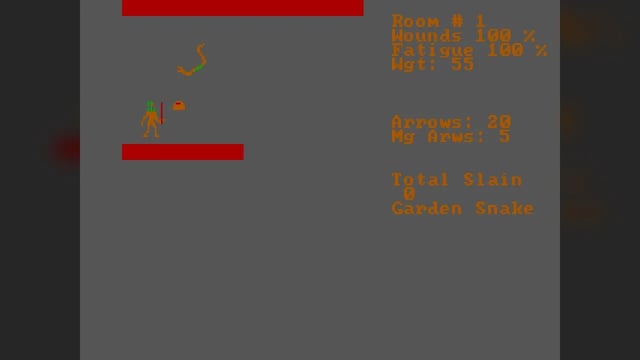
In this first expansion for the classic dungeon crawler Temple of Apshai, the small town above the ruins of Apshai opens up to adventurers. Clean up the innkeeper's backyard and explore Merlis' cottage, Olias' cellar and Benedic's monastery. Across four new levels and more than 150 rooms you'll face restless dead, hidden traps and the killer tomatoes of the vegetable garden. Originally released in 1981 by Automated Simulations, with the IBM PC version following in 1982. This Wavedash version is the MS-DOS release from Pixel Games UK.
1980s · RPG · Dungeon Crawler
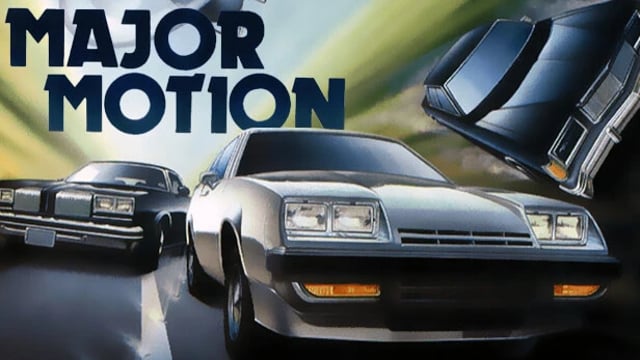
In this action-packed top-down vehicular combat game from the 1980s, take on the role of a lone road warrior fighting to protect the highways of the western frontier from the sinister Draconian League. Drive a high-tech spy car equipped with machine guns, oil slicks, missiles, and more.
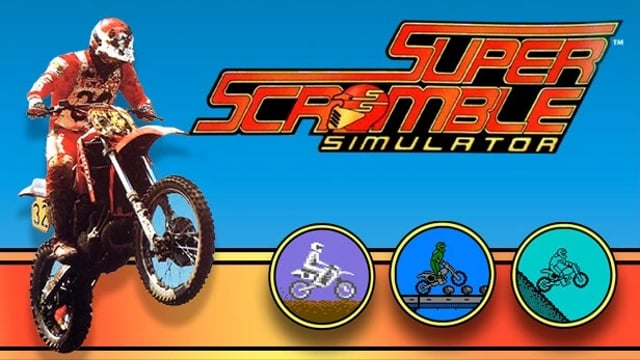
In this challenging motocross simulator, originally released in 1989, make your way through a series of hazardous motocross courses. Carefully control your speed, angle, and gearing. Perform tricky wheelies and other stunts. Originally released in 1989 by Mr Chip Software, this dirtbike simulator brought motocross to home computers. This Wavedash version is the ZX Spectrum release from Pixel Games UK.
Solve increasingly demanding challenges in Tetra Quest, a puzzle game originally released for the Amiga in 1988 by Microdeal.
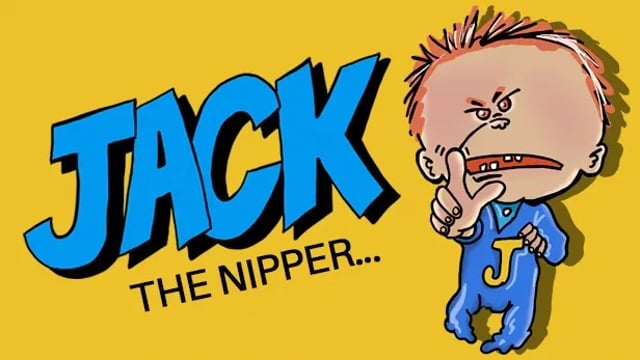
Originally released in 1986, this classic game for home microcomputers from British developers Gremlin Graphics saw players take on the role of toddler terror Jack in his quest to be as naughty as possible! Gameplay Toddle throughout the town, bringing your own brand of baby bedlam. Jump on things, pick up objects and drop them where they will be the most annoying, find and use a wide variety of items to raise your naughtyness as high as possible! But be careful: many enemies roam the screens looking to give you a nasty nappy rash.
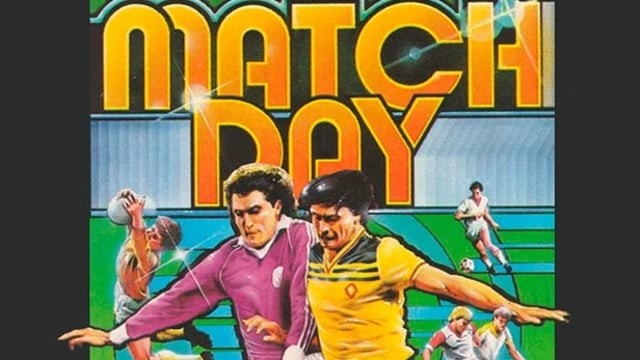
In this thrilling football game from the mid-1980s, lead your team to victory against computer opponents, or take on your friends in multiplayer modes. Originally released in the mid-1980s by Ocean Software, Match Day boasted unprecedented ball control and a unique side-view pitch. This Wavedash version is the ZX Spectrum release from Pixel Games UK.
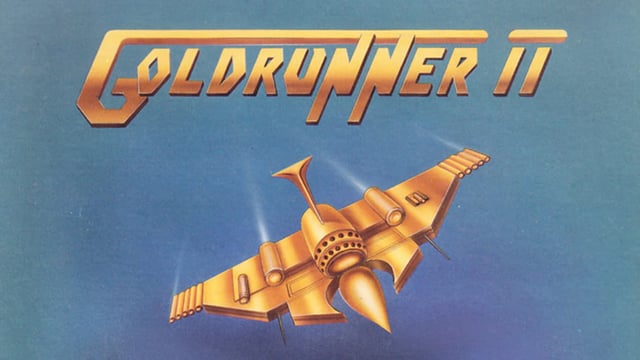
Return to the cockpit in Goldrunner II, a fast vertically scrolling shoot ’em up originally released for the Amiga in 1988 by Microdeal.

One of the earliest games in the platformer genre, Jumpman sees you take on the role of an intrepid agent tasked with collecting and disarming deadly bombs laid by the evil Alienators. Traverse the 30 challenging levels of Jupiter headquarters, running, climbing and jumping from platform to platform - but watch out! A single misstep will send you tumbling to the ground! Originally released in 1983, Jumpman became the first big hit for developer Epyx, and remains an icon of the platformer genre. Features 30 different levels 5 different modes (Beginner, Intermediate, Advanced, Grand Loop and Randomizer) Play with up to 4 players in a round-robin fashion
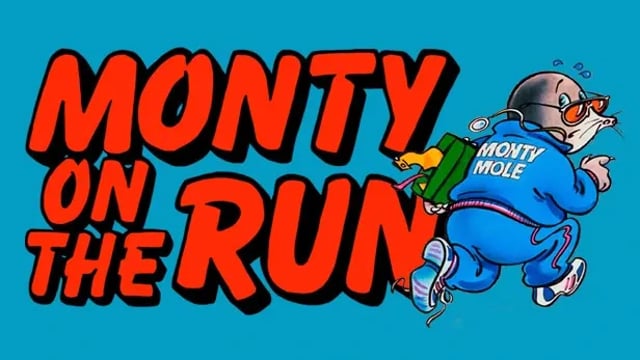
Originally released in 1985, this classic platformer for home microcomputers from British developers Gremlin Graphics saw players take on the role of Monty Mole, recently escaped from Scudmore Prison and fleeing for his life! Gameplay Choose 5 of the offered 21 items from the 'Freedom Kit' to carry with you. Make your way to freedom through many hideouts and secret locations. Can you make the cross-channel ferry in time?
1980s · 2D Platformer · Action
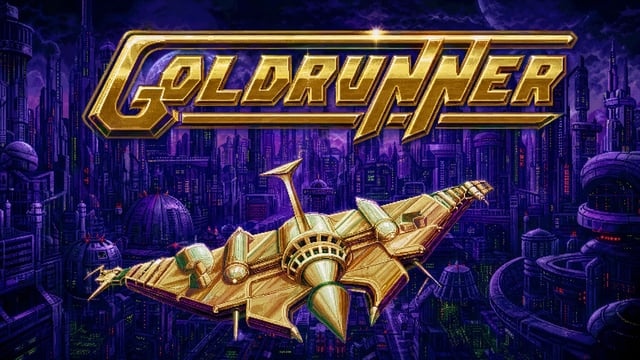
In Goldrunner, a vertically scrolling shooter, earth has to be evacuated because of the damage caused by environmental pollution. Unfortunately the space ships have to pass through the world of Triton - and the inhabitants are unfriendly. So the obvious solution is to destroy the rings, huge space stations. A full frontal attack is without a change of success because the rings have to be destroyed from within. So the player is chosen to man a small space ship to do the job. Every ring has a certain amount of energy which has to be reduced by destroying everything inside. Of course the Tritons won't give up without a fight, but touching the enemies won't hurt the space ship (it hurts them): the only way to die is by touching enemy mines (the ship can take up to five hits) or by flying against a high, indestructible building (instant death). The ship also has a turbo boost function and between levels there are bonus rounds which are used to rack up points for the high score list.
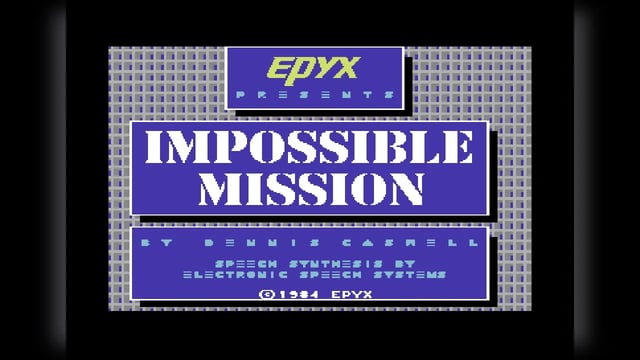
Ask anyone who loves retro games from back in the day if they remember ‘Impossible Mission’ – they will almost certainly answer you back with the synthesised voice response of “Stay a while, stay FOREVER!” While this classic, and at the time ground-breaking, game was ported to nearly every computer and console format of the time, it surprisingly was never ported to IBM PCs (only the sequel was). Playing a secret agent (Agent 4125) on a mission to stop the evil Professor ‘Elvin Atombender’, who it is believed is tampering with the national security computers. You must infiltrate Atombender's lair, avoid his deadly robots (or use one of your limited ‘snooze codes’ on them!), and acquire the various pieces of a password for you to use in the main control room. You have 6 literal hours to complete the game; but 10 minutes of this time is lost each time you ‘die’ within the game, and a further 2 minutes are expended if you have use the help function on your mission ‘portable computer’. With 32 rooms and 90 robots it’s no wonder this mission has been classified as ‘Impossible’ – Good luck agent 4125!

Spline is a one-button arcade game about momentum, perfect landings, and chasing your next record. Ride an endless curve beneath a neon sky. Hold to dive and build speed, then release near the crest to launch into the air. Time your descent, match the slope, and chain Perfect landings to boost your score and reach new heights. Every run gets faster as you travel further. Push your distance multiplier, collect coins between the dunes, and keep your streak alive as the landscape rushes beneath you. One well-timed landing can turn a promising run into a new personal best. One-button controls: easy to pick up, with timing that rewards practice. Endless runs: travel further as the pace increases. Perfect landing chains: build multipliers and charge stronger launches. Unlockable skins: spend collected coins to change your look. Achievements and rewards: complete milestones and claim bonus coins. Global and friends leaderboards: compete for the highest score and longest run. Cloud saves on Wavedash: keep your progress across devices.
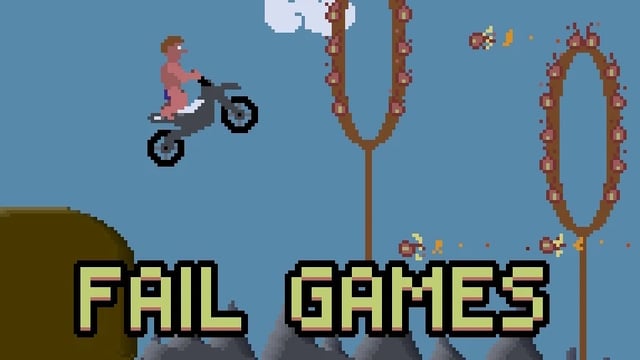
FAIL GAMES is a collection of brutally hard but simple minigames. Beat each game to unlock the next. Earn coins when you fail and spend them on outfits and effects. So easy to learn your grandma could play it, but so hard to master you'll throw your PC out the window. And your grandma. WARNING: THIS GAME CONTAINS SEAGULLS Every game takes 5 seconds. Mastering it might take 500 attempts. FAIL GAMES is a collection of brutally difficult one-button physics games where every tiny mistake ends with your face on a rock — or worse. Those poor rocks. Leap off towering cliffs. Launch yourself down impossible ski jumps. Dodge seagulls, survive spinning saws, fight unpredictable winds, and somehow stick the perfect landing. Discover and beat 50+ games to become the Champion! Anyone can press one button. But can you master it? Features 🎯 50+ handcrafted games 🕹️ Simple one-button controls 💀 Brutally difficult physics-based gameplay 🖥️ Retro C64-inspired pixel art aesthetics ⚡ Instant restarts 🏆 Online leaderboards & achievements 🎭 Unlockable outfits, skins & effects 🎉 Spectacular ragdoll failures 🔥 Endless "one more try" gameplay Failure happens every five seconds. Success is rare. Welcome to FAIL GAMES.
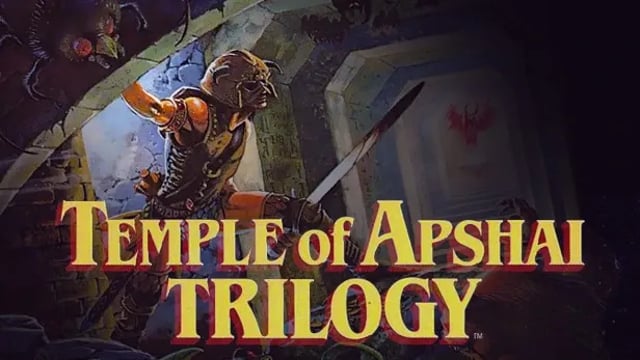
Relive the classic fantasy role play experience that spellbound players in 1985. This game was a remastered combination of the three games from the Dunjonquest series (Temple of Apshai, Upper Reaches of Apshai, and Curse of Ra). Create a character, buy equipment, enter the dungeon and prepare for adventure. Explore and fight your way to hidden treasure and magical items. Gain experience, cure your wounds, recover from fatigue and survive to reach the next level. All that lies before you cannot be foretold, even by the Oracle. I can tell you that the greatest adventure lies not in the din of sword or shield, or in the rapacious hoard of silver and diamond. Nor in the gleam of distant sunsets, or the firm visage of mailed warriors who guard ancient kingdoms. It lies within. Within Apshai. Within you.
1980s · RPG · Dungeon Crawler
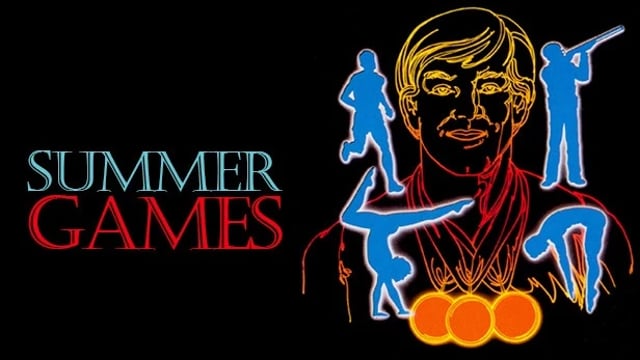
Compete in a wide variety of athletic events in this classic game from the 1980s, including pole vault, gymnastics, 100 m dash, and skeet shooting. Originally released by Epyx. This Wavedash version is the Sega Master System release from Pixel Games UK.

Originally released in 1989 as a launch title for the Atari Lynx handheld console, Blue Lightning saw players take control of a top-secret high-tech fighter jet. Gameplay Armed with an 81 mm cannon and guided missiles, penetrate enemy territory and fly nine crucial missions. The Blue Lightning is capable of barrel rolls to dodge enemy fire, and is equipped with powerful afterburners that give a 10 second speed boost.
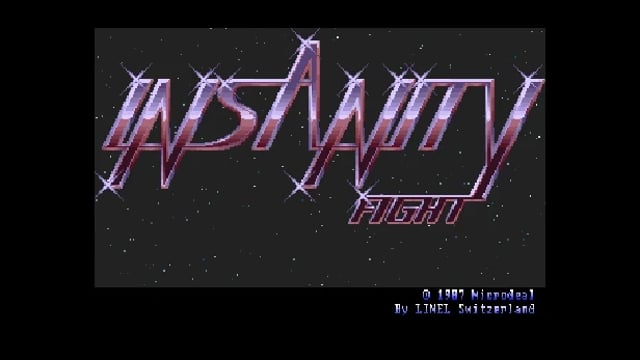
Battle through waves of enemies in Insanity Fight, a vertically scrolling shoot ’em up originally released for the Amiga in 1987 by Microdeal.
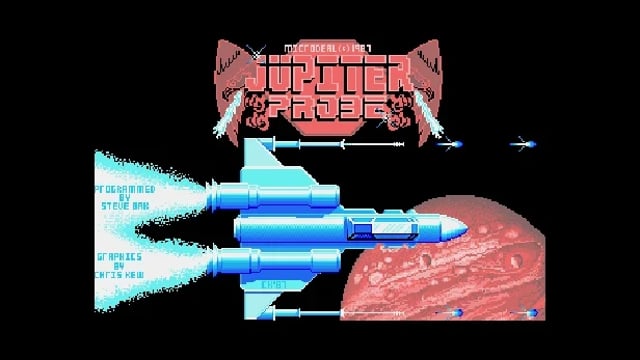
Defend the solar system in Jupiter Probe, a fast vertical-scrolling shoot ’em up originally released for the Amiga in 1987 by Microdeal. Pilot your craft through hostile formations and escalating waves of alien fire.
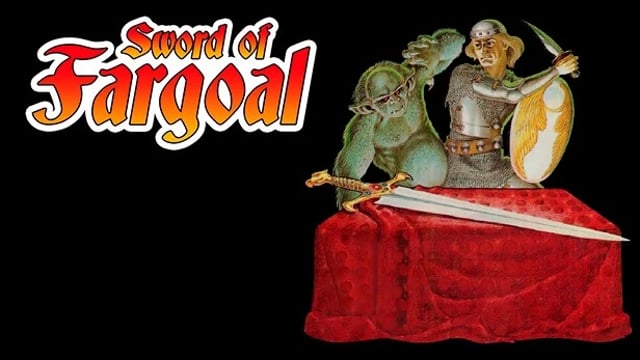
In this classic roguelike, released in 1983 for the Commodore 64 by Epyx, search the dark depths of a twisted dungeon, teeming with fiendish enemies and dangerous traps, for the legendary Sword of Fargoal, the only thing that can defeat the evil wizard Umla. This Wavedash version is the Commodore 64 release from Pixel Games UK.