Real Time Tactics
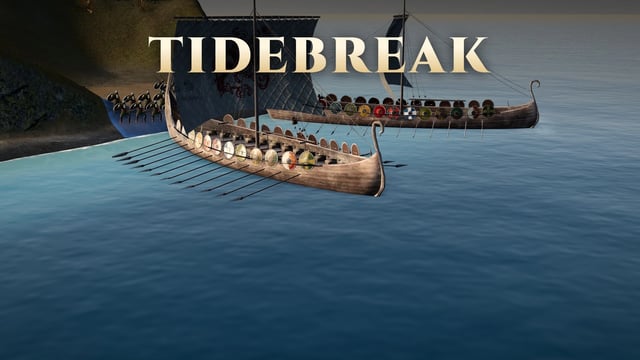
Tidebreak is a real-time 3D tactics game about defending a Norse village from Viking raids. Before every raid you see exactly where each longship will beach, how many raiders it carries and when it arrives. Use that warning: raise mounds where they must not land, dig flooded ditches to slow them, and place your squads. A shield wall holds the beach, spearmen take on brutes and battering rams, archers shoot from high ground, berserkers charge, and healers keep them standing. Then the ships come in, and every landing is a small battle you can turn with a braced wall, a well-timed volley or a charge. A run crosses a sea chart of seven islands: quiet shores and heavy raids, a trading post, an abandoned fort, a storm, a village already burning, an ambush. Win an island, take a card (veterans, new squads, rules that change how you fight) and muster fresh men with the gold your houses earn. Torch-bearers, ram crews and bowmen change the plan as the tide rises, and at the end waits the jarl's fleet or the sea-king on two lashed longships. Read the raid, then shape the shore so the ships land where you want them Five squad types with abilities, named veterans who rank up Roguelite runs of 15-25 minutes; one island takes 3-5 A daily island and a weekly challenge, the same for everyone, with leaderboards Commanders and five ascension levels for harder runs Best played on a computer with a mouse. It also runs on phones (turn the phone sideways), but the controls are fiddly on a small screen.
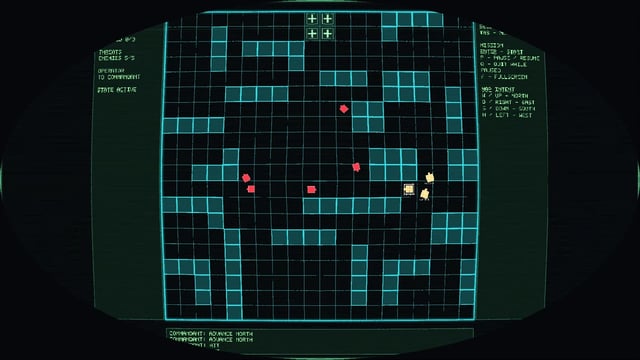
Scope Dark is a real-time tactical extraction game for PC that puts you behind a radar, not directly in control of a squad member. You act as the operator, guiding a three-person team through a hostile field toward a single extraction point while your agents handle movement, cover, contact, and firing on their own. Gameplay: The core tension comes from indirect command, reading the battlefield, and making the right call under pressure. You do not move units cell by cell or click exact destinations; instead, you give tactical route guidance and let the squad’s local decision-making carry out the advance. Every mission is deterministic and seeded, so the same seed always produces the same map, enemy deployment, blackout timing, and simulation behavior. The battlefield is built to feel dense but readable, with cover, sightline breaks, and multiple possible routes rather than maze-like traps. A mission begins with the squad staged at the bottom of a 20x20 map and a protected extraction checkpoint at the top. Four hostile interceptors deploy in the center, and the squad must cross the field to rescue at least one agent. Eliminating every enemy is not a win condition by itself. The game is won only when at least one agent reaches extraction, while the run fails if the whole squad is down before any rescue. Story / Mission framing: Scope Dark is less about scripted narrative and more about the tension of a single covert operation under hostile conditions. You are watching a squad trying to break through an enemy field, with every decision shaped by cover, visibility, and timing. The checkpoint is the only way out, and every blackout, contact report, and blocked route changes how you read the situation. The mission structure is designed to create a strong tactical story from the simulation itself. Blackout and command: A global radar blackout periodically hides enemy contacts and situation reports without stopping the simulation. This means the squad keeps moving, enemies keep reacting, and your information becomes incomplete at the worst possible moments. The result is a constant push and pull between trusting the agents, waiting for better information, and committing to a route before the window closes. Commands are simple, keyboard-driven, and intentionally grounded in tactical intent rather than direct control. Presentation and features: Scope Dark uses a compact CRT-radar presentation with procedural visuals and generated audio, with no external image or sound assets. The interface is built to keep the battlefield readable while preserving the feeling of scanning a hostile scope. Missions use a fixed-time simulation tick, replay support, and a transparent scoring system based on extraction, rescued health, enemies neutralized, speed, and casualties. Achievements and leaderboard support are included for the solo build. PvP: A PvP mode is currently in development. The planned competitive mode keeps the same seeded extraction simulation, blackout rules, and input model, but applies them to an asymmetric multiplayer confrontation between extraction and interception teams. Scope Dark is built for players who enjoy tactical pressure, readable systems, and replayable runs where smart decisions matter more than reflexes.